Please wait a minute...
Welcome to Visited Vertebrata Palasiatica, Today is
IMAGE/TABLE DETAILS
New materials of Exallerix pustulatus (Erinaceidae, Eulipotyphla) from Nei Mongol and other Brachyericinae of China
LI Lu, LI Qiang, WANG Xiao-Ming
Vertebrata Palasiatica    2025, 63 (4): 335-349.   DOI: 10.19615/j.cnki.2096-9899.250910
Abstract   (981 HTML20 PDF(pc) (2341KB)(227)  

This article describes new fossil material of Exallerix pustulatus from the early Late Oligocene of Nei Mongol, China. The specimens supplement and clarify certain mandibular and lower dental morphological features of this species, allowing for further comparisons with other short-faced hedgehogs. Previously, E. pustulatus had only been recorded from the Hsanda Gol Formation at Taatsiin Gol, in the Valley of Lakes, Mongolia. This discovery of new material from Sonid Left Banner marks the first occurrence of the genus Exallerix in China. In addition, discussions of other short-faced hedgehog fossils from Chinese localities confirm the validity of Metexallerix gaolanshanensis, which lived during the late Late Oligocene, approximately 25 Ma. Furthermore, the short-faced hedgehog specimens from locality Damiao 16 in Nei Mongol are tentatively referred to Synexallerix junggarensis, rather than M. gaolanshanensis.


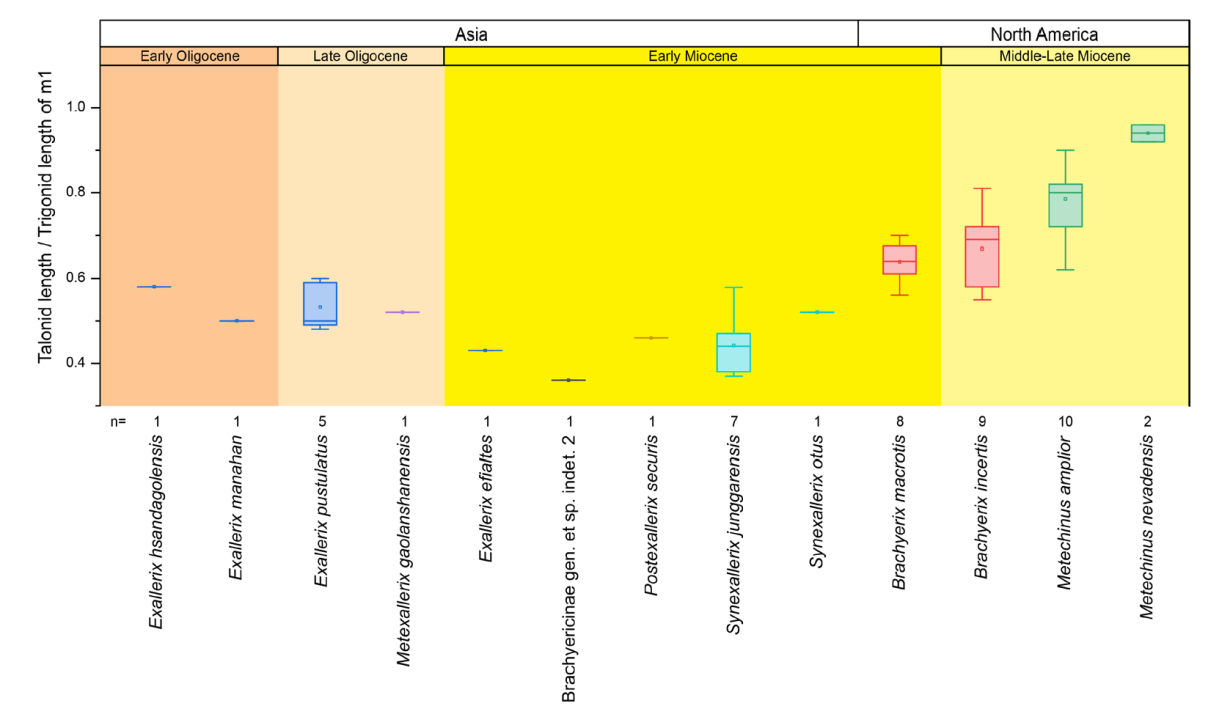
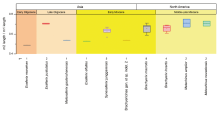
Fig. 5 Statistics and comparison measurements of m1 of Exallerix pustulatus with other short-faced hedgehogs
n: number of samples. Data and source references see Supplementary data 2
Extracts from the Article
The m2: the morphology of the m2 is generally similar to that of the m1. The ratio of m2 length to m1 length is approximately 0.70 (Fig. 5), which is notably higher than that observed in other species of Exallerix (Lopatin and Zaghigin, 2003). The trigonid of the m2 is relatively shorter than that of the m1. The protoconid and metaconid are more distinctly separated on the m2 than on the m1. Additionally, the labial crown base of the m2 is considerably flatter than that of the m1.
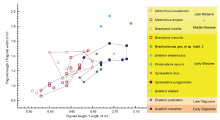
As noted by Lopatin and Zazhigin (2003), Asian short-faced hedgehogs, including Synexallerix, Posterallerix, and Exallerix, exhibit a more derived dental morphology, specifically: 1) a narrower and more elongated m1 trigonid (Fig. 4); 2) a relatively shorter talonid on the m1 (Fig. 5); and 3) a smaller ratio of m2 length to m1 length (Fig. 6). In contrast, the dental features of Exallerix pustulatus show closer resemblance to those of North American short-faced hedgehogs.
Other Images/Table from this Article