New materials of Exallerix pustulatus (Erinaceidae, Eulipotyphla) from Nei Mongol and other Brachyericinae of China
LI Lu, LI Qiang, WANG Xiao-Ming
Vertebrata Palasiatica
2025, 63 ( 4):
335-349.
DOI: 10.19615/j.cnki.2096-9899.250910
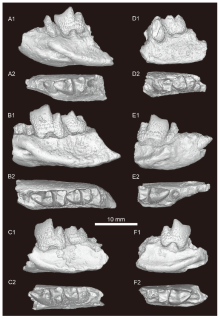
This article describes new fossil material of Exallerix pustulatus from the early Late Oligocene of Nei Mongol, China. The specimens supplement and clarify certain mandibular and lower dental morphological features of this species, allowing for further comparisons with other short-faced hedgehogs. Previously, E. pustulatus had only been recorded from the Hsanda Gol Formation at Taatsiin Gol, in the Valley of Lakes, Mongolia. This discovery of new material from Sonid Left Banner marks the first occurrence of the genus Exallerix in China. In addition, discussions of other short-faced hedgehog fossils from Chinese localities confirm the validity of Metexallerix gaolanshanensis, which lived during the late Late Oligocene, approximately 25 Ma. Furthermore, the short-faced hedgehog specimens from locality Damiao 16 in Nei Mongol are tentatively referred to Synexallerix junggarensis, rather than M. gaolanshanensis.
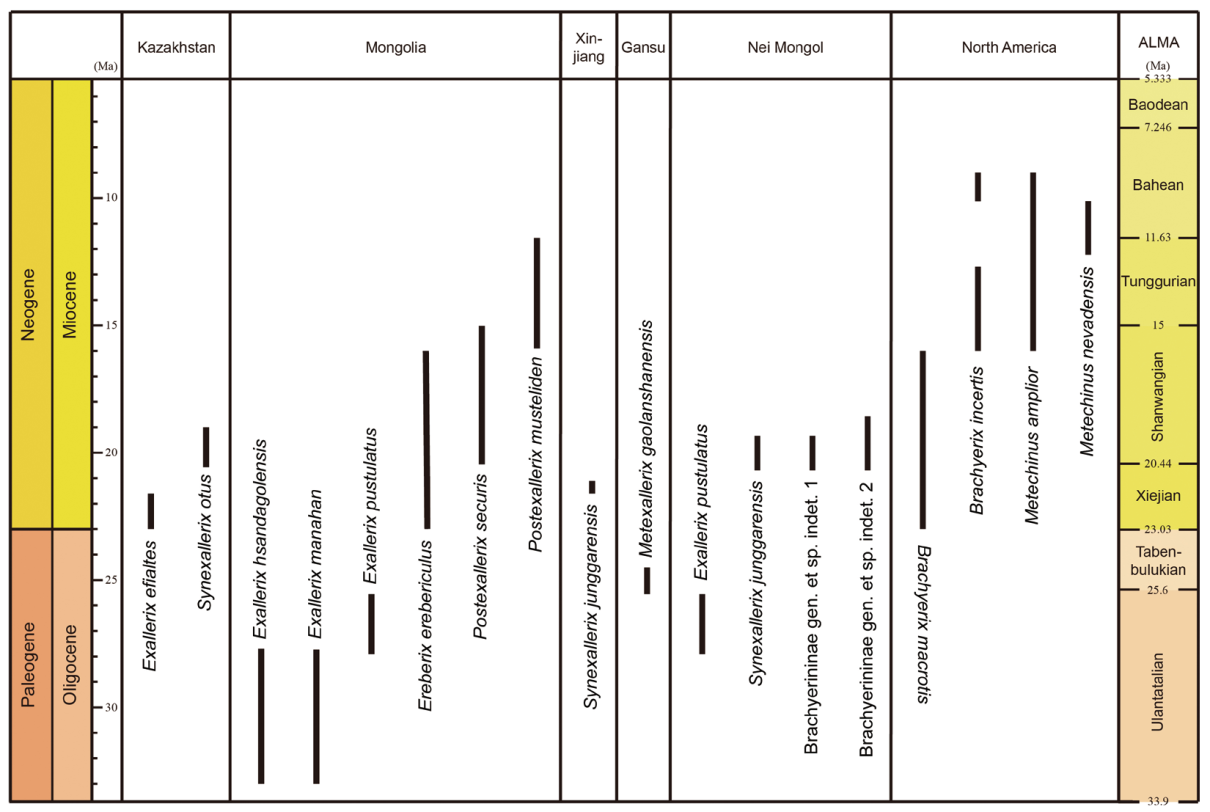
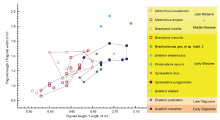
Fig. 1
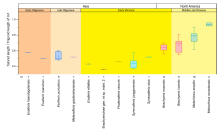
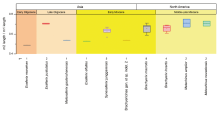
Geological historical distribution of short-faced hedgehogs in the world
For data and source references see Supplementary data 1
Extracts from the Article
In 1924, Matthew described and named the first species of short-faced hedgehog based on material from the Snake Creek Fauna of Nebraska, USA (Matthew, 1924). However, it was initially misclassified within Talpa of the family Talpidae. In 1929, Matthew described Metechinus nevadensis from Nevada, USA, and this study correctly identified its affinities with the Erinaceidae (Matthew, 1929). Subsequently, short-faced hedgehogs were repeatedly reported from North America (Matthew and Mook, 1933; Meade, 1941; Stevens, 1977; Martin and Lim, 2004). It was not until 1967 that McKenna and Holton formally recognized the Brachyericinae as an independent subfamily, placing it on equal footing with the Erinaceinae and the Hylomyinae (sometimes referred to as Echinosoricinae or Galericinae), during their study of Exallerix hsandagolensis collected from the Hsanda Gol Formation in Mongolia by the Third Asiatic Expedition (McKenna and Holton, 1967). From 1971 onward, Rich and colleagues carried out systematic reviews of short-faced hedgehogs in North America (Rich and Rich, 1971; Rich, 1981). Since 1996, Lopatin and his collaborators have described and named several new genera and species of short-faced hedgehogs from Kazakhstan and Mongolia, providing a preliminary synthesis of the Asian record (Lopatin, 1996, 2020; Lopatin and Zazhigin, 2003). They also suggested that some European specimens may belong to the Brachyericinae (Ziegler, 1990; Lopatin and Zazhigin, 2003), although this interpretation remains controversial and is not yet widely accepted. In 2007, Ziegler et al. studied new materials of short-faced hedgehogs (Exallerix pustulatus and Exallerix sp.) from the Valley of Lakes in Mongolia (Ziegler et al., 2007) (Fig. 1).
In China, Qiu and Gu described and named the first short-faced hedgehog species in 1988: Metexallerix gaolanshanensis from Lanzhou, Gansu Province. They rejected any close phylogenetic relationship between short-faced hedgehogs and Dimylechinus, a genus known from the Early Miocene of Europe (Qiu and Gu, 1988). In 1996, Meng et al. reported the discovery of short-faced hedgehogs (Metexallerix? sp.) from Gashunyin Adege in Nei Mongol (Meng et al., 1996). In 1999, Bi described another new species (M. junggarensis) from the Suosuoquan Formation in the Junggar Basin of Xinjiang (Bi, 1999). In 2011, Zhang et al. documented additional occurrences of M. gaolanshanensis from Siziwang Banner in Nei Mongol (Zhang et al., 2011; Kaakinen et al., 2015; Sukselainen et al., 2017). Most recently, in 2021, Li and Li examined newly collected specimens along with two previously undetermined species from several Lower Miocene localities in Nei Mongol (Li and Li, 2021) (Fig. 1).
Other Images/Table from this Article
|