
古脊椎动物学报 ›› 2026, Vol. 64 ›› Issue (1): 1-25.DOI: 10.19615/j.cnki.2096-9899.251117CSTR: 32090.14.j.cnki.2096-9899.251117
• • 下一篇
邱铸鼎1( ), 王伴月1, 李录1
收稿日期:2025-07-26
出版日期:2026-01-20
发布日期:2025-12-30
基金资助:
QIU Zhu-Ding1(), Lawrence J. FLYNN2, WANG Ban-Yue1, LI Lu1
Received:2025-07-26
Published:2026-01-20
Online:2025-12-30
Contact:
qiuzhuding@ivpp.ac.cn摘要:
记述了甘肃临夏盆地晚中新世伊哈池地点的仓鼠类啮齿动物,并讨论了其在中亚生态环境变化中的重要意义。该地点主要产出小哺乳动物遗骸,此前已对化石组合及相关问题做了初步报道,对其中的松鼠类进行了详细的描述和讨论(Qiu et al.,
中图分类号:
邱铸鼎, 王伴月, 李录. 甘肃晚中新世伊哈池地点的仓鼠化石. 古脊椎动物学报, 2026, 64(1): 1-25.
QIU Zhu-Ding, Lawrence J. FLYNN, WANG Ban-Yue, LI Lu. Cricetids (Rodentia, Mammalia) from the Late Miocene Yihachi locality of Gansu, China. Vertebrata Palasiatica, 2026, 64(1): 1-25.
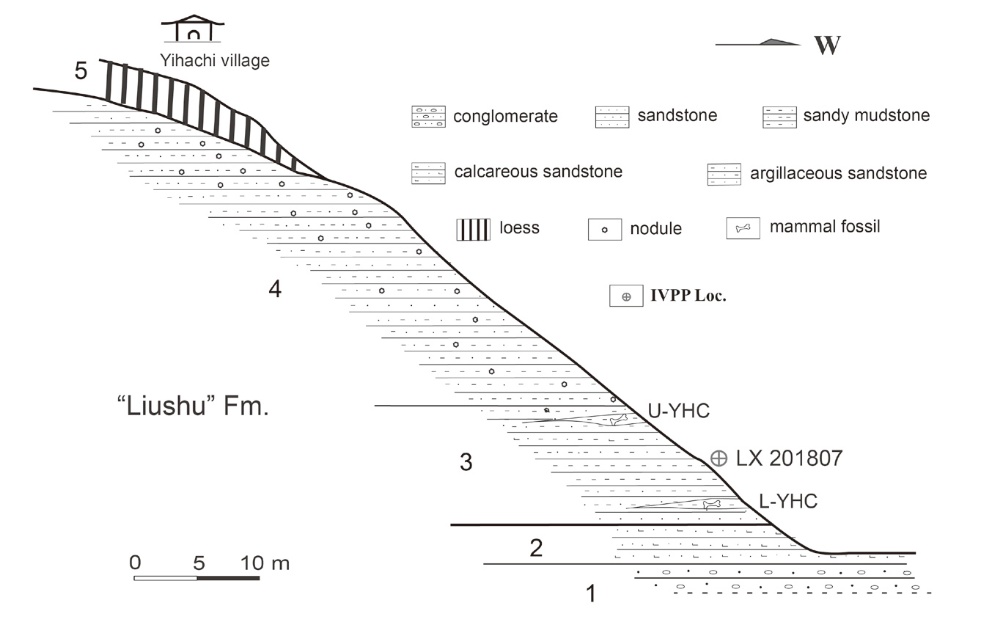
Fig. 1 Section of the fossil locality Yihachi
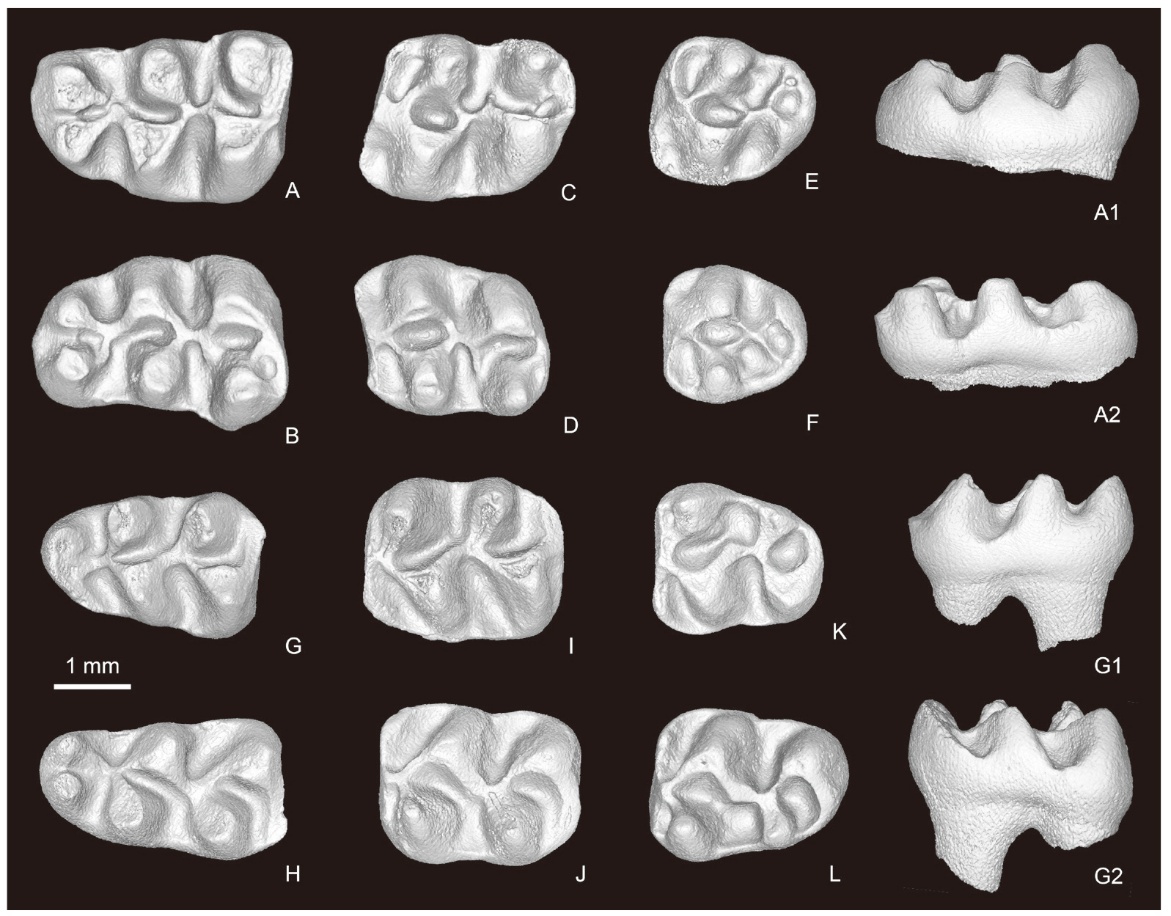
Fig. 2 Molars of Nannocricetus primitivus from Yihachi, Gansu A. l M1 (IVPP V34185.376); B. r M1 (V34185.1); C. l M2 (V34185.377); D. r M2 (V34185.2); E. l M3 (V34185.378); F. r M3 (V34185.3); G. l m1 (V34185.379); H. r m1 (V34185.4); I. l m2 (V34185.380); J. r m2 (V34185.5); K. l m3 (V34185.381); L. r m3 (V34185.6) A-L. occlusal views; A1, G1. lingual views; A2, G2. buccal views
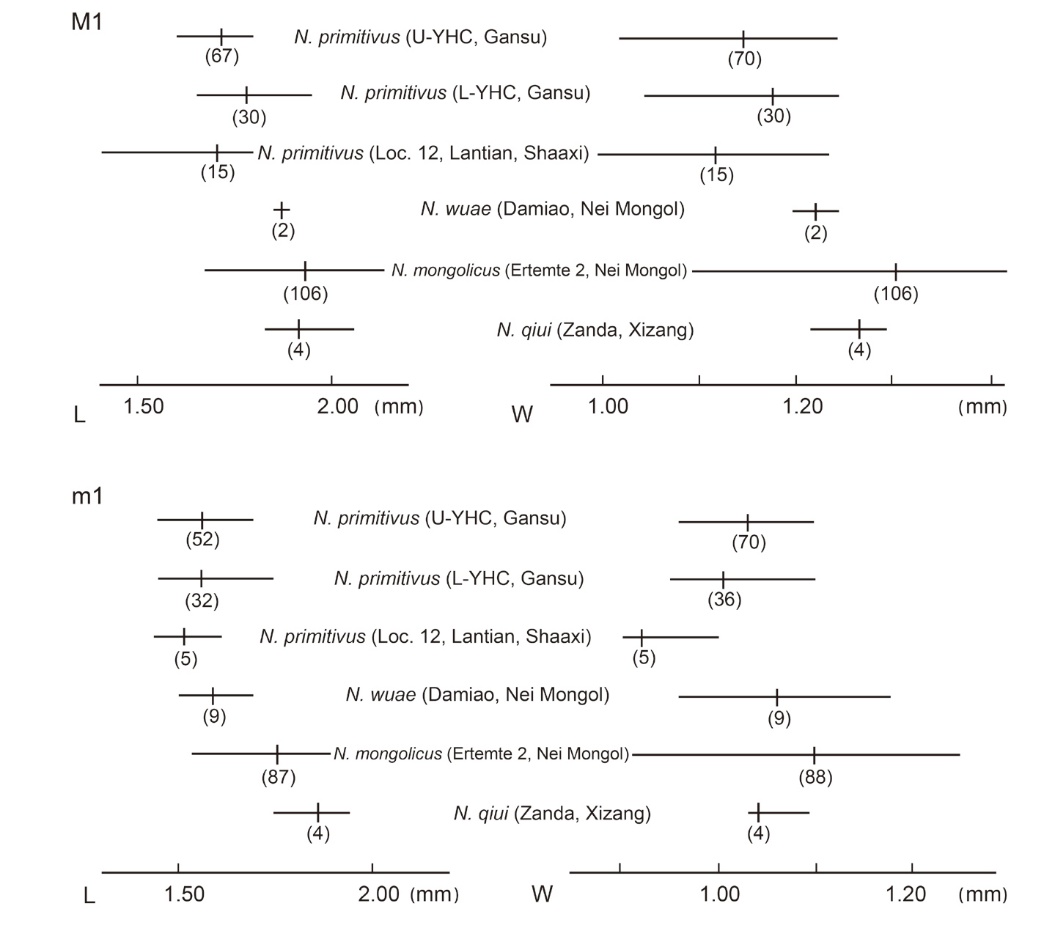
Fig. 3 Size ranges and averages of length and width in the first molars of various species of Nannocricetus from Yihachi, Gansu and other localities in China Measurements of Lantian N. primitivus, N. wuae, Ertemte N. mongolicus and N. qiui are cited from Zhang et al., 2008, 2011; Wu, 1991, and Li et al., 2018, respectively Numbers inside the parentheses are specimen numbers
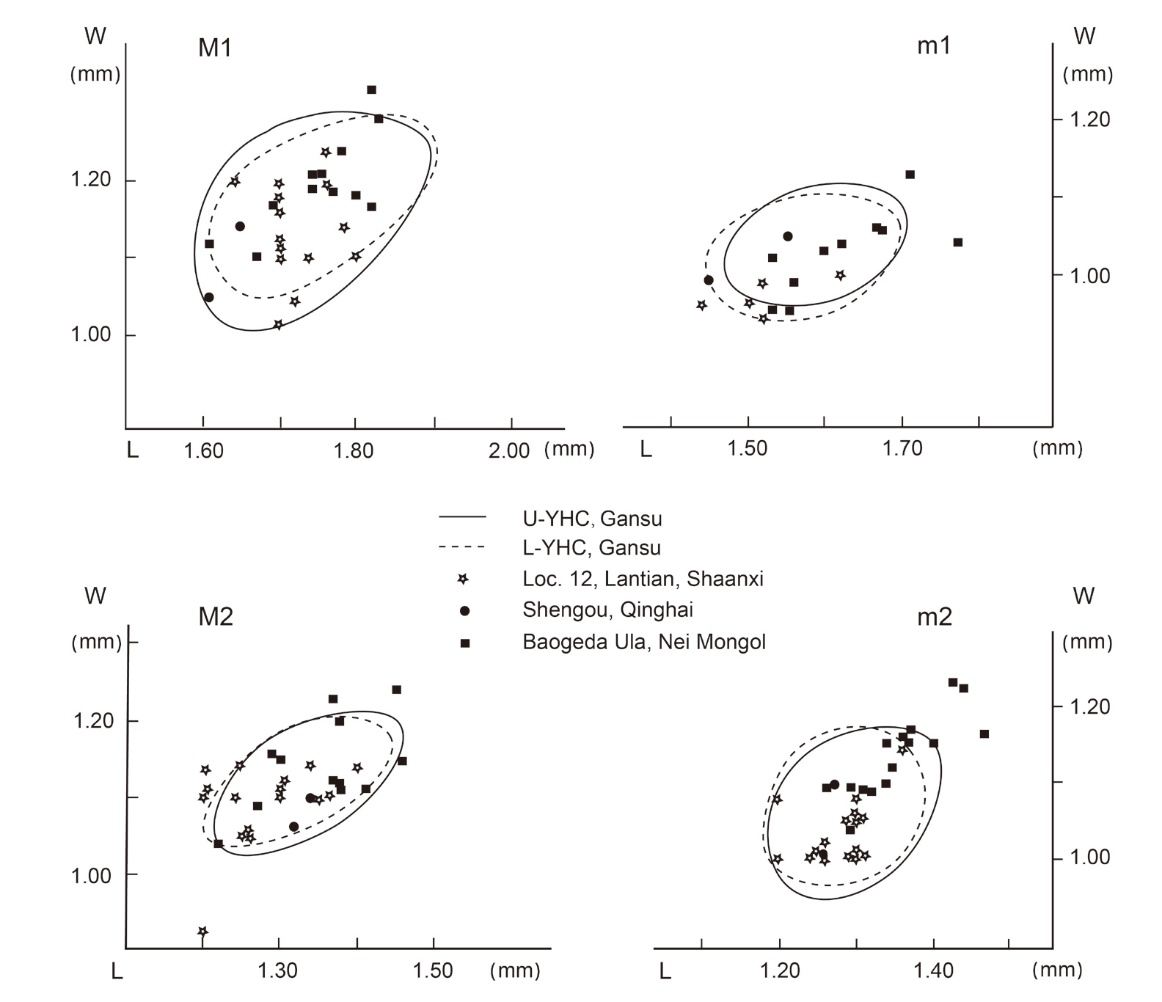
Fig. 4 Scatter diagrams showing the length and width of the first two molars of Nannocricetus primitivus from Yihachi, Gansu and some other localities in northern China Measurements of specimens from Lantian, Shengou and Baogeda Ula are cited from Zhang et al., 2008, Qiu and Li, 2008, 2016
| Tooth | Length | Width | |||||
|---|---|---|---|---|---|---|---|
| N | Range | Average | N | Range | Average | ||
| U-YHC (upper lens) | |||||||
| M1 | 67 | 1.60‒1.90 | 1.71 | 70 | 1.02‒1.25 | 1.15 | |
| M2 | 63 | 1.22‒1.45 | 1.33 | 64 | 1.02‒1.20 | 1.11 | |
| M3 | 52 | 0.90‒1.15 | 1.03 | 52 | 0.90‒1.15 | 1.01 | |
| m1 | 52 | 1.45‒1.70 | 1.59 | 51 | 0.95‒1.10 | 1.03 | |
| m2 | 66 | 1.20‒1.40 | 1.30 | 65 | 0.95‒1.15 | 1.07 | |
| m3 | 60 | 1.10‒1.35 | 1.21 | 60 | 0.85‒1.10 | 0.98 | |
| L-YHC (lower lens) | |||||||
| M1 | 30 | 1.65‒1.95 | 1.78 | 30 | 1.05‒1.25 | 1.18 | |
| M2 | 35 | 1.20‒1.45 | 1.34 | 35 | 1.05‒1.20 | 1.13 | |
| M3 | 14 | 0.92‒1.05 | 1.00 | 14 | 0.92‒1.05 | 1.00 | |
| m1 | 32 | 1.45‒1.70 | 1.56 | 36 | 0.95‒1.10 | 1.01 | |
| m2 | 43 | 1.15‒1.35 | 1.28 | 42 | 1.00‒1.16 | 1.07 | |
| m3 | 21 | 1.05‒1.27 | 1.19 | 21 | 0.90‒1.05 | 0.98 | |
Table 1 Measurements of molars of Nannocricetus primitivus from Yihachi, Gansu (mm)
| Tooth | Length | Width | |||||
|---|---|---|---|---|---|---|---|
| N | Range | Average | N | Range | Average | ||
| U-YHC (upper lens) | |||||||
| M1 | 67 | 1.60‒1.90 | 1.71 | 70 | 1.02‒1.25 | 1.15 | |
| M2 | 63 | 1.22‒1.45 | 1.33 | 64 | 1.02‒1.20 | 1.11 | |
| M3 | 52 | 0.90‒1.15 | 1.03 | 52 | 0.90‒1.15 | 1.01 | |
| m1 | 52 | 1.45‒1.70 | 1.59 | 51 | 0.95‒1.10 | 1.03 | |
| m2 | 66 | 1.20‒1.40 | 1.30 | 65 | 0.95‒1.15 | 1.07 | |
| m3 | 60 | 1.10‒1.35 | 1.21 | 60 | 0.85‒1.10 | 0.98 | |
| L-YHC (lower lens) | |||||||
| M1 | 30 | 1.65‒1.95 | 1.78 | 30 | 1.05‒1.25 | 1.18 | |
| M2 | 35 | 1.20‒1.45 | 1.34 | 35 | 1.05‒1.20 | 1.13 | |
| M3 | 14 | 0.92‒1.05 | 1.00 | 14 | 0.92‒1.05 | 1.00 | |
| m1 | 32 | 1.45‒1.70 | 1.56 | 36 | 0.95‒1.10 | 1.01 | |
| m2 | 43 | 1.15‒1.35 | 1.28 | 42 | 1.00‒1.16 | 1.07 | |
| m3 | 21 | 1.05‒1.27 | 1.19 | 21 | 0.90‒1.05 | 0.98 | |
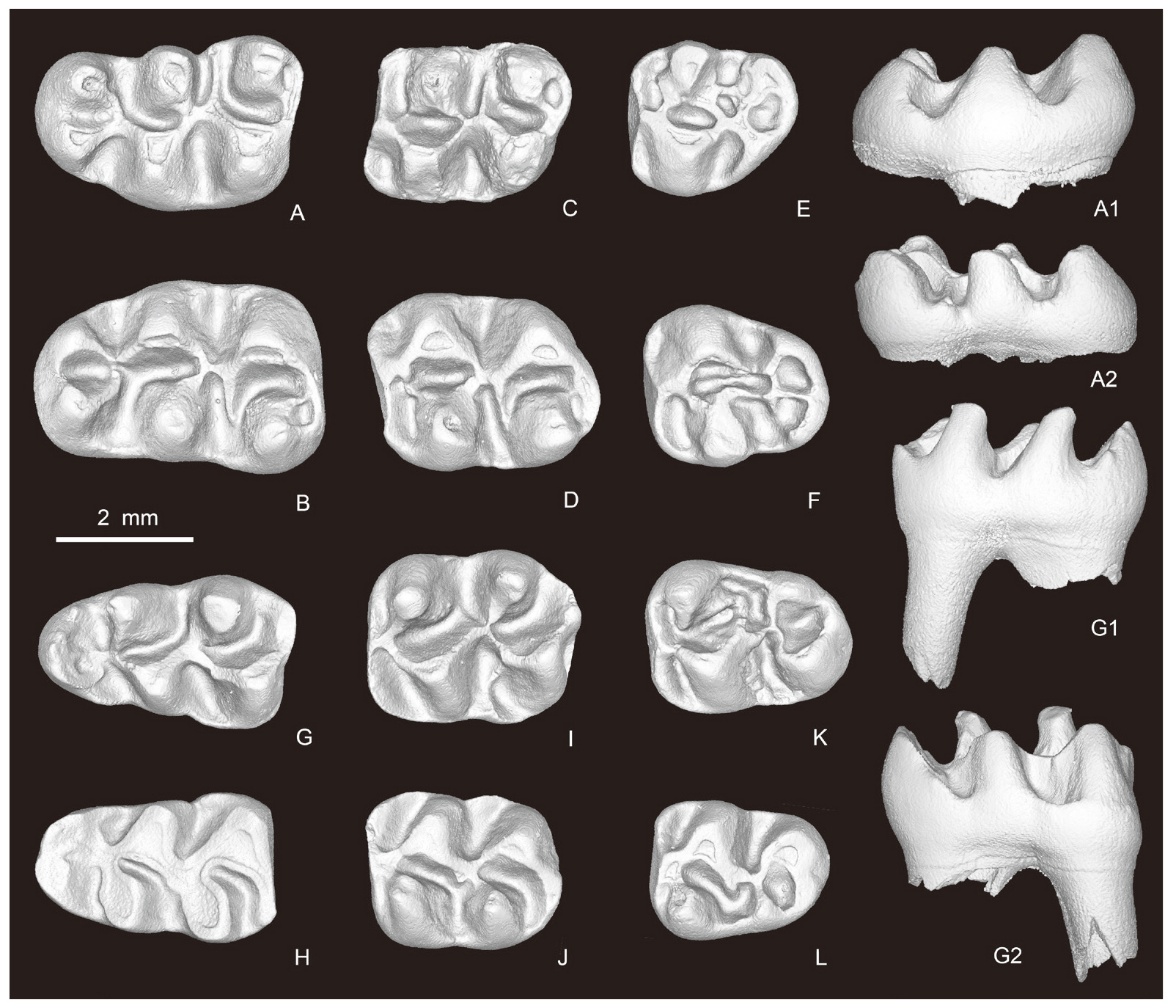
Fig. 5 Molars of Sinocricetus primus sp. nov. from Yihachi, Gansu A. l M1 (IVPP V34186, holotype); B. r M1 (V34188.1); C. l M2 (V34187.1); D. r M2 (V34188.2); E. l M3 (V34187.2); F. r M3 (V34188.3); G. l m1 (V34188.4); H. r m1 (V34187.3); I. l m2 (V34188.5); J. r m2 (V34187.4); K. l m3 (V34188.6); L. r m3 (V34187.5) A-L. occlusal views; A1, G1. lingual views; A2, G2. buccal views
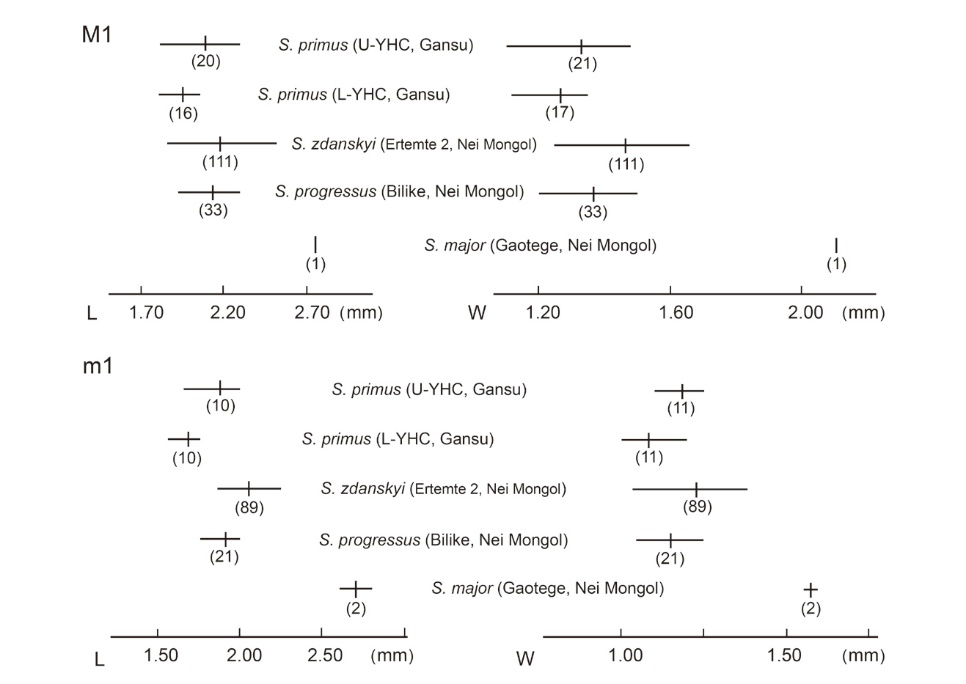
Fig. 6 Size ranges and averages of length and width in the first molars of Sinocricetus primus sp. nov. from Yihachi, Gansu and other species of the genus in China Measurements of S. zdanskyi from Ertemte, S. progressus from Bilike, and S. major from Gaotege are cited from Wu, 1991; Qiu and Storch, 2000; Li, 2010, respectively Numbers inside the parentheses are specimen numbers
| Tooth | Length | Width | |||||
|---|---|---|---|---|---|---|---|
| N | Range | Average | N | Range | Average | ||
| U-YHC (upper lens) | |||||||
| M1 | 20 | 1.80‒2.30 | 2.09 | 21 | 1.10‒1.48 | 1.33 | |
| M2 | 19 | 1.35‒1.85 | 1.59 | 19 | 1.15‒1.40 | 1.31 | |
| M3 | 18 | 1.15‒1.55 | 1.39 | 18 | 1.05‒1.35 | 1.24 | |
| m1 | 10 | 1.65‒2.00 | 1.89 | 11 | 1.10‒1.25 | 1.19 | |
| m2 | 17 | 1.40‒1.65 | 1.57 | 16 | 1.05‒1.40 | 1.27 | |
| m3 | 12 | 1.20‒1.90 | 1.55 | 12 | 1.00‒1.30 | 1.17 | |
| L-YHC (lower lens) | |||||||
| M1 | 16 | 1.80‒2.05 | 1.93 | 17 | 1.12‒1.35 | 1.27 | |
| M2 | 12 | 1.34‒1.65 | 1.47 | 12 | 1.15‒1.36 | 1.25 | |
| M3 | 14 | 0.92‒1.05 | 1.00 | 14 | 0.92‒1.05 | 1.00 | |
| m1 | 10 | 1.56‒1.75 | 1.69 | 11 | 1.00‒1.20 | 1.08 | |
| m2 | 15 | 1.32‒1.55 | 1.44 | 15 | 1.05‒1.30 | 1.18 | |
| m3 | 10 | 1.32‒1.55 | 1.43 | 10 | 0.97‒1.40 | 1.12 | |
Table 2 Measurements of molars of Sinocricetus primus sp. nov. from Yihachi, Gansu (mm)
| Tooth | Length | Width | |||||
|---|---|---|---|---|---|---|---|
| N | Range | Average | N | Range | Average | ||
| U-YHC (upper lens) | |||||||
| M1 | 20 | 1.80‒2.30 | 2.09 | 21 | 1.10‒1.48 | 1.33 | |
| M2 | 19 | 1.35‒1.85 | 1.59 | 19 | 1.15‒1.40 | 1.31 | |
| M3 | 18 | 1.15‒1.55 | 1.39 | 18 | 1.05‒1.35 | 1.24 | |
| m1 | 10 | 1.65‒2.00 | 1.89 | 11 | 1.10‒1.25 | 1.19 | |
| m2 | 17 | 1.40‒1.65 | 1.57 | 16 | 1.05‒1.40 | 1.27 | |
| m3 | 12 | 1.20‒1.90 | 1.55 | 12 | 1.00‒1.30 | 1.17 | |
| L-YHC (lower lens) | |||||||
| M1 | 16 | 1.80‒2.05 | 1.93 | 17 | 1.12‒1.35 | 1.27 | |
| M2 | 12 | 1.34‒1.65 | 1.47 | 12 | 1.15‒1.36 | 1.25 | |
| M3 | 14 | 0.92‒1.05 | 1.00 | 14 | 0.92‒1.05 | 1.00 | |
| m1 | 10 | 1.56‒1.75 | 1.69 | 11 | 1.00‒1.20 | 1.08 | |
| m2 | 15 | 1.32‒1.55 | 1.44 | 15 | 1.05‒1.30 | 1.18 | |
| m3 | 10 | 1.32‒1.55 | 1.43 | 10 | 0.97‒1.40 | 1.12 | |
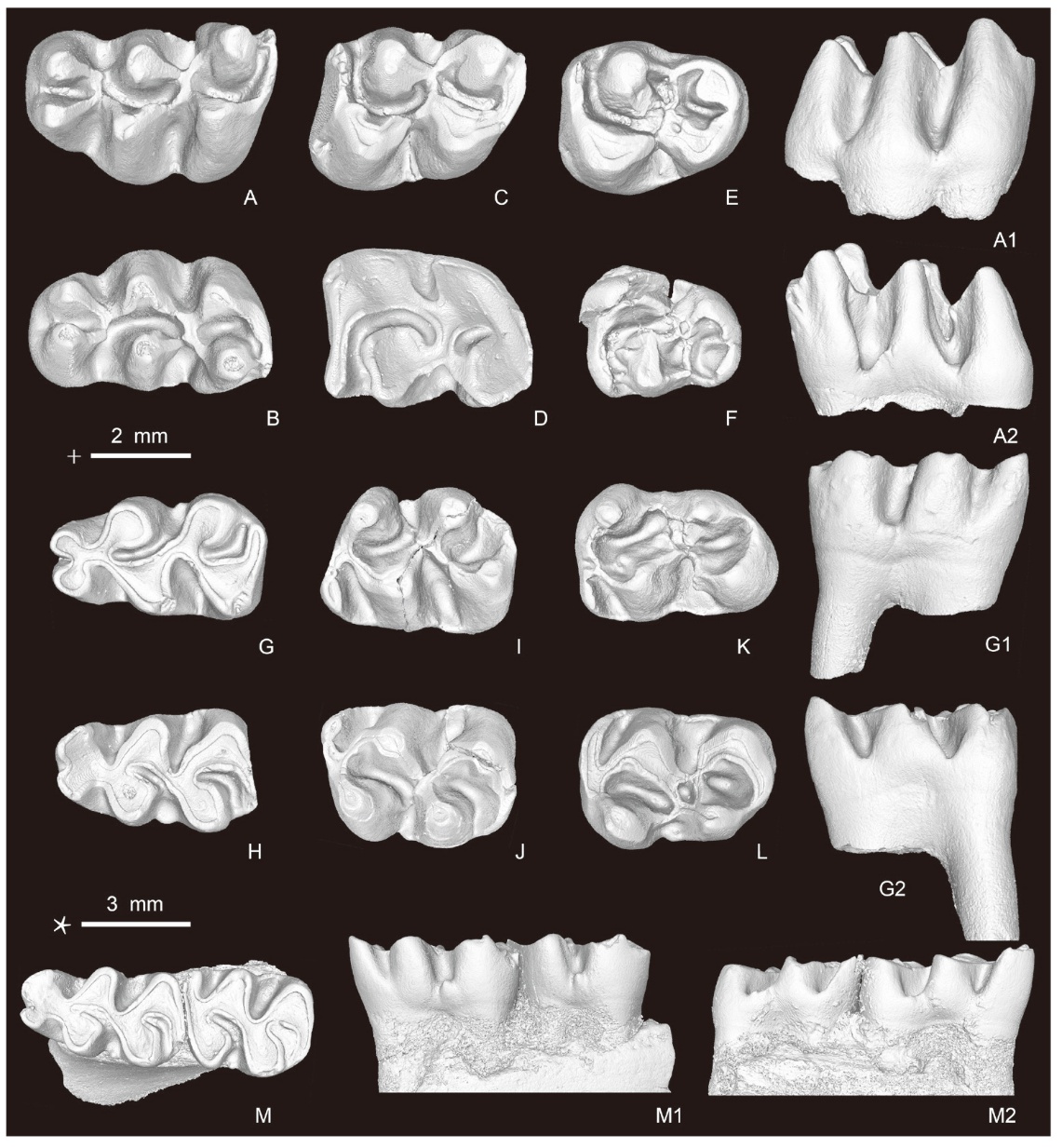
Fig. 7 Molars of Mesocricetus fengi sp. nov. from Yihachi, Gansu A. l M1 (IVPP V34189, holotype); B. r M1 (V34190.2); C. l M2 (V34190.3); D. l M2 (V34191.1, reversed); E. l M3 (V34190.4); F. r M3 (V34190.5); G. l m1 (V34190.6); H. r m1 (V34190.7); I. l m2 (V34190.8); J. r m2 (V34190.9); K. l m3 (V34190.10); L. r m3 (V34190.11), M. right mandibular fragment with m1-2 (V34190.1) A-M. occlusal views; A1, G1, M1. lingual views; A2, G2, M2. buccal views. Scale bars: + for A-L, * for M
| Tooth | Length | Width | |||||
|---|---|---|---|---|---|---|---|
| N | Range | Average | N | Range | Average | ||
| U-YHC (upper lens) | |||||||
| M1 | 4 | 2.40‒2.70 | 2.58 | 5 | 1.50‒1.75 | 1.63 | |
| M2 | 5 | 2.10‒2.25 | 2. 15 | 5 | 1.55‒1.65 | 1.62 | |
| M3 | 3 | 1.70‒1.76 | 1.74 | 4 | 1.33‒1.55 | 1.45 | |
| m1 | 7 | 2.05‒2.30 | 2.18 | 9 | 1.35‒1.45 | 1.41 | |
| m2 | 7 | 1.85‒2.00 | 1.95 | 7 | 1.40‒1.65 | 1.50 | |
| m3 | 9 | 1.70‒2.06 | 1.94 | 7 | 1.20‒1.50 | 1.38 | |
| L-YHC (lower lens) | |||||||
| M2 | 2 | 1.95‒2.00 | 1.98 | 2 | 1.50‒1.60 | 1.55 | |
Table 3 Measurements of molars of Mesocricetus fengi sp. nov. from Yihachi, Gansu (mm)
| Tooth | Length | Width | |||||
|---|---|---|---|---|---|---|---|
| N | Range | Average | N | Range | Average | ||
| U-YHC (upper lens) | |||||||
| M1 | 4 | 2.40‒2.70 | 2.58 | 5 | 1.50‒1.75 | 1.63 | |
| M2 | 5 | 2.10‒2.25 | 2. 15 | 5 | 1.55‒1.65 | 1.62 | |
| M3 | 3 | 1.70‒1.76 | 1.74 | 4 | 1.33‒1.55 | 1.45 | |
| m1 | 7 | 2.05‒2.30 | 2.18 | 9 | 1.35‒1.45 | 1.41 | |
| m2 | 7 | 1.85‒2.00 | 1.95 | 7 | 1.40‒1.65 | 1.50 | |
| m3 | 9 | 1.70‒2.06 | 1.94 | 7 | 1.20‒1.50 | 1.38 | |
| L-YHC (lower lens) | |||||||
| M2 | 2 | 1.95‒2.00 | 1.98 | 2 | 1.50‒1.60 | 1.55 | |
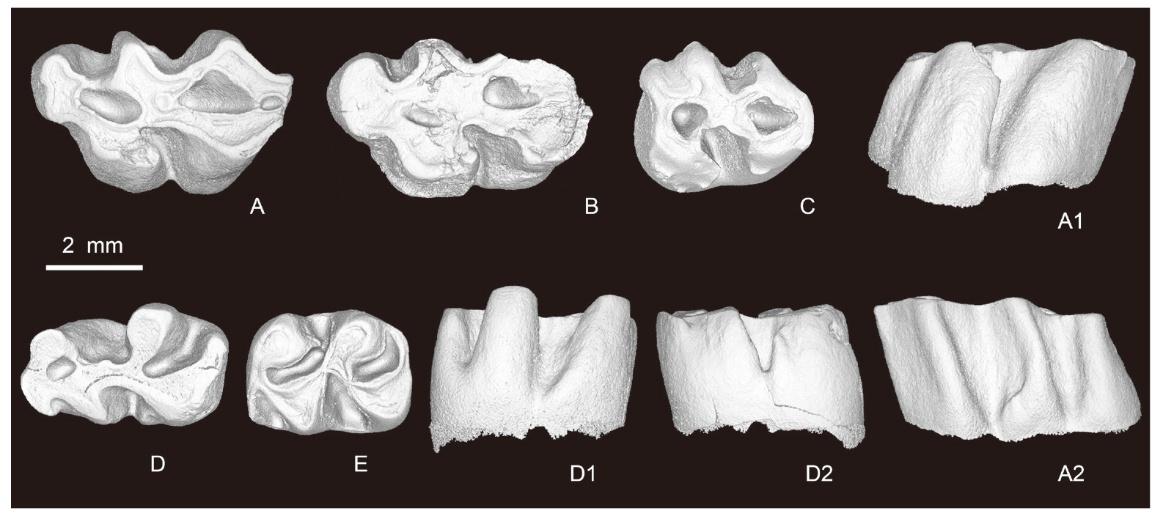
Fig. 8 Molars of Rhinocerodon linxiamys sp. nov. from Yihachi, Gansu A. r M1 (IVPP V34192, holotype, reversed); B. r M1 (V34193.1, reversed); C. l M3 (V34194.1); D. l m1 (V34193.2); E. l m2 (V34194.2). A-E. occlusal views; A1, D1. lingual views; A2, D2. buccal views
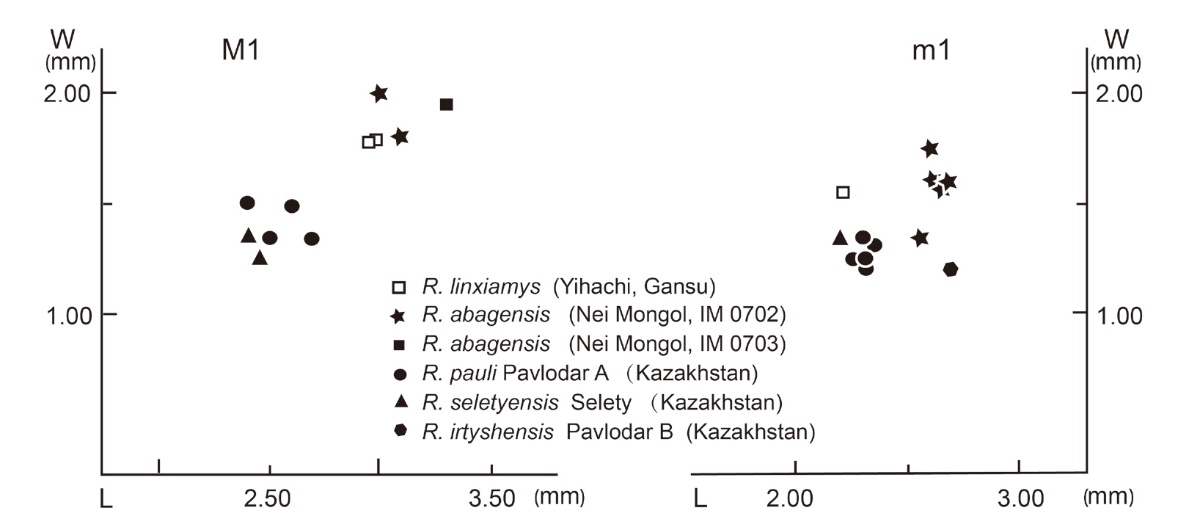
Fig. 9 Scatter diagrams showing length and width in the first molars of Rhinocerodon from Yihachi, Gansu and other species of the genus from Kazakhstan and Nei Mongol Measurements of the specimens of the Kazakhstan species are cited from Zazhigin, 2003
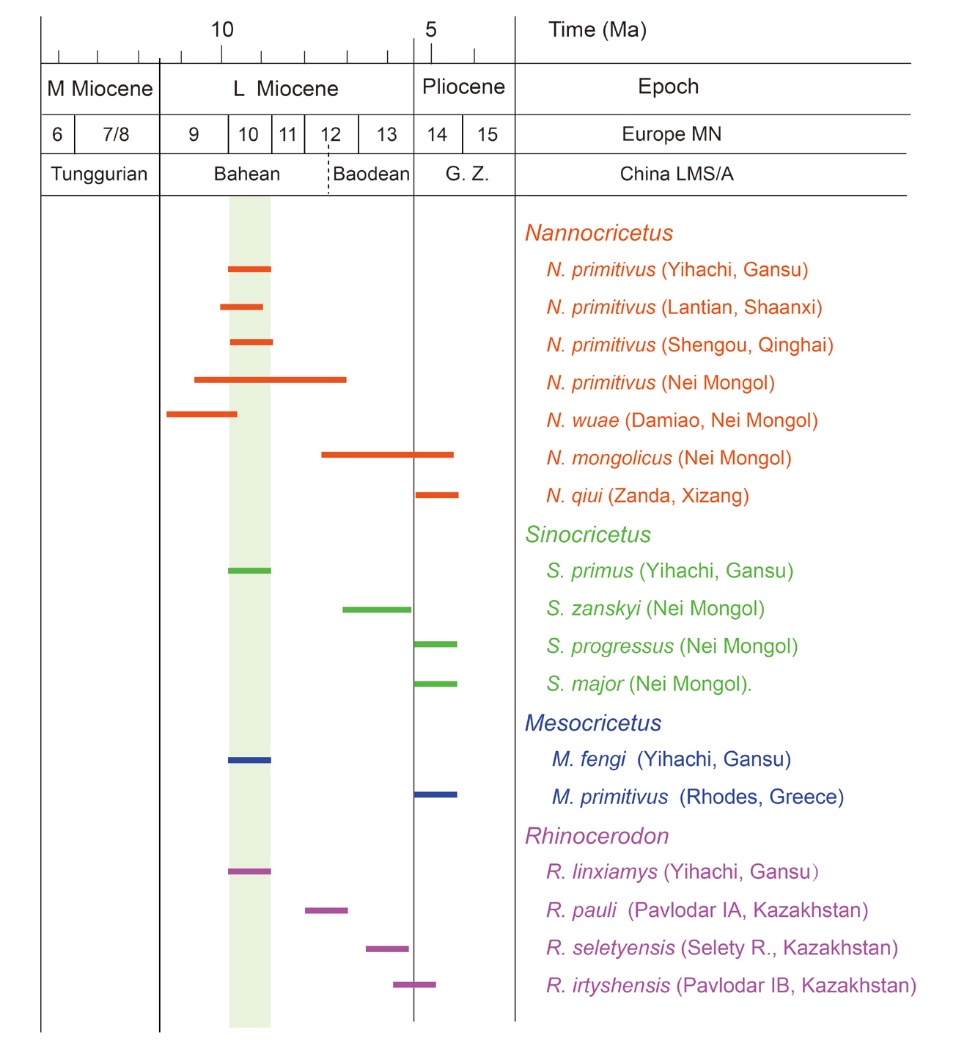
Fig. 10 Biostratigraphic ranges of various species of the cricetid genera present in the Yihachi Fauna G. Z. in the China LMS/A column indicates Gaozhuangian; Shading indicates the proposed ages of Yihachi cricetid composition
| [1] |
An Z, John E K, Warren L P et al., 2001. Evolution of Asian monsoons and phased uplift of the Himalaya-Tibetan plateau since Late Miocene times. Nature, 411: 62-66
DOI |
| [2] | de Bruijn H, Dawson M R, Mein P, 1970. Upper Pliocene Rodentia, Lagomorpha and Insectivora (Mammalia) from the isle of Rhodes (Greece). Proc K Ned Akad Wet, Ser B, 73(5): 552-567 |
| [3] |
Kaakinen A, Aziz H A, Passey B H et al., 2015. Age and stratigraphic context of Pliopithecus and associated fauna from Miocene sedimentary strata at Damiao, Inner Mongolia, China. J Asian Earth Sci, 100: 78-90
DOI URL |
| [4] | Li Q, 2010. Note on the cricetids from the Pliocene Gaotege locality, Nei Mongol. Vert PalAsiat, 48(3): 247-261 |
| [5] |
Li Q, Xie G P, Takeuchi G T et al., 2014. Vertebrate fossils on the roof of the world: biostratigraphy and geochronology of high-elevation Kunlun Pass Basin, northern Tibetan Plateau, and basin history as related to the Kunlun strike-slip fault. Palaeogeogr Palaeoclimatol Palaeoecol, 411: 46-55
DOI URL |
| [6] | Li Q, Stidham T A, Ni X J et al., 2018. Two new Pliocene hamsters (Cricetidae, Rodentia) from southwestern Tibet (China), and their implications for rodent dispersal ‘into Tibet’. J Vert Paleont, doi: 10.1080/02724634.2017.1403443 |
| [7] |
Liu T S, Ding M L, Derbyshire E, 1996. Gravel deposits on the margins of the Qinghai-Xizang Plateau, and their environmental significance. Paleogeogr Palaeoclimatol Palaeoecol, 120: 159-170
DOI URL |
| [8] | Maridet O, Daxner-Höck G, Badamgarav D et al., 2014. Cricetidae (Rodentia, Mammalia) from the Valley of Lakes (Central Mongolia): focus on the Miocene record. Ann Nat Mus Wien, 116: 247-269 |
| [9] | Qiu Z D, Li L, 2023. Miocene squirrels from Linxia Basin, Gansu, China: paleoenvironmental and palaeoecological implications. Palaeogeogr Palaeoclimatol Palaeoecol, 619: 1-14 |
| [10] | Qiu Z D, Li Q, 2008. Late Miocene micromammals from the Qaidam Basin in the Qinghai-Xizang Plateau. Vert PalAsiat, 46(4): 284-306 |
| [11] | Qiu Z D, Li Q, 2016. Neogene rodents from central Nei Mongol, China. Palaeontol Sin, New Ser C, 30: 1-684 |
| [12] | Qiu Z D, Storch G, 2000. The Early Pliocene micromammalian fauna of Bilike, Inner Mongolia, China (Mammalia: Lipotyphla, Chiroptera, Rodentia, Lagomorpha). Senckenbergiana lethaea, 80: 173-229 |
| [13] | Qiu Z D, Wang B Y, Li L, 2023. Middle Cenozoic micromammals from Linxia Basin, Gansu Province, China, and their implications for biostratigraphy and palaeoecology. Palaeogeogr Palaeoclimatol Palaeoecol, 616: 1-17 |
| [14] | Schaub S, 1930. Quartare und jungteriare Hamster. Abh Schweiz Paläont Gesell, 49: 1-49 |
| [15] | Schaub S, 1934. Über einige fossile Simplicidentaten aus China und der Mongolei. Abh Schweiz Paläont Gesell, 54: 1-40 |
| [16] |
Strömberg C A E, 2011. Evolution of grassland ecosystems. Ann Rev Earth Planet Sci, 39: 517-544
DOI URL |
| [17] | Wang B Y, Wu W Y, Qiu Z D, 2020. Family Cricetidae Fischer von Waldheim, 1817. In: In: Qiu Z D, Li C K, Zheng S H eds. Palaeovertebrata Sinica, Vol. III, Fasc 5(2). Beijing: Science Press. 10-152 |
| [18] | Wang P X, 1998. Deformtion of Asia and global cooling: searching links between climate and tectonics. Quat Sci, 3: 213-221 |
| [19] | Wu W Y, 1991. The Neogene mammalian faunas of Ertemte and Harr Obo in Inner Mongolia (Nei Mongol), China. 9. Hamster: Cricetinae (Rodentia). Senckenbergiana lethaea, 71: 257-305 |
| [20] |
Zazhigin V S, 2003. New genus of Cricetodontinae (Rodentia: Cricetidae) from the Late Miocene of Kazakhstan. Russ J Theriol, 2(2): 65-69
DOI URL |
| [21] | Zhang Z Q, Zheng S H, Li L P, 2008. Late Miocene cricetids from the Bahe Formation, Shaanxi Province. Vert PalAsiat, 46(4): 307-316 |
| [22] | Zhang Z Q, Wang L H, Liu Y et al., 2011. A new species of Late Miocene hamster (Cricetidae, Rodentia) from Damiao, Nei Mongol. Vert PalAsiat, 49(2): 201-209 |
| [23] | Zheng S H, Zhang Z Q, 2001. Late Miocene-Early Pleistocene biostratigraphy of the Leijiahe area, Lingtai, Gansu. Vert PalAsiat, 39(2): 215-228 |
| [1] | 穆罕默德·伊利亚斯, 李强, 史勤勤, 倪喜军. 欧亚大陆晚中新世 “麝牛类” 牛科动物. 古脊椎动物学报, 2024, 62(4): 262-290. |
| [2] | Anek R. SANKHYAN, Olivier CHAVASSEAU. 印度Haritalyangar地区晚中新世猪类化石新材料. 古脊椎动物学报, 2024, 62(1): 69-84. |
| [3] | 劳伦斯J.弗林, 李强, 吉学平, 王晓鸣. 云南晚中新世一巨型竹鼠. 古脊椎动物学报, 2023, 61(4): 277-283. |
| [4] | 王伴月. 副竹鼠(拟速掘鼠亚科,鼠超科)一新种在甘肃临夏盆地的发现. 古脊椎动物学报, 2022, 60(4): 271-277. |
| [5] | Henry GALIANO, 曾志杰, Nikos SOLOUNIAS, 王晓鸣, 邱占祥, Stuart C. WHITE. 甘肃临夏盆地中新世鬣狗科一新属新种. 古脊椎动物学报, 2022, 60(2): 81-116. |
| [6] | 张晓晓, 孙丹辉. 甘肃庆阳晚中新世板齿犀类的骰骨材料及其形态学意义. 古脊椎动物学报, 2022, 60(1): 29-41. |
| [7] | 王世骐, 李春晓, 张晓晓. 乳齿象类的命名与中文译法及分类学问题讨论. 古脊椎动物学报, 2021, 59(4): 295-332. |
| [8] | 安晓青, 张兆群. 气候变化与早期兔形类的演化:基于内蒙古Ordolagus新材料的研究. 古脊椎动物学报, 2021, 59(2): 138-168. |
| [9] | 王倩, 刘艳, 王李花, 傅明楷, 张兆群. 内蒙古韩家营玄武岩夹层中三趾马动物群化石. 古脊椎动物学报, 2021, 59(2): 125-137. |
| [10] | 张立民, 董为, 倪喜军, 李强. 晚中新世晚期土城子小哺乳动物组合及土城子动物群在内蒙古中部地区新近纪哺乳动物群序列中的位置. 古脊椎动物学报, 2021, 59(1): 45-63. |
| [11] | 王伴月, 邱占祥. 豪猪化石在临夏盆地的新发现. 古脊椎动物学报, 2020, 58(3): 204-220. |
| [12] | 王伴月, 邱占祥, 李绿洲. 甘肃和政晚中新世许氏鼠(啮齿类:鼠科)头骨化石. 古脊椎动物学报, 2020, 58(2): 120-133. |
| [13] | 熊武阳. 陕西府谷晚中新世巨鬣狗(Dinocrocuta gigantea)(食肉目:鬣狗科)颅基部形态研究. 古脊椎动物学报, 2019, 57(4): 274-307. |
| [14] | 刘玉海, 朱敏, 林翔鸿, 卢立伍, 盖志琨. 新疆塔里木盆地志留纪盔甲鱼类新知. 古脊椎动物学报, 2019, 57(4): 253-273. |
| [15] | 陈 鹤,王世骐,陶大卫,夏秀敏,陈善勤,吴 妍. 晚中新世甘肃黑犀(Diceros gansuensis)的食性——基于牙结石淀粉粒证据. 古脊椎动物学报, 2018, 56(4): 343-353. |
| 阅读次数 | ||||||
|
全文 |
|
|||||
|
摘要 |
|
|||||
