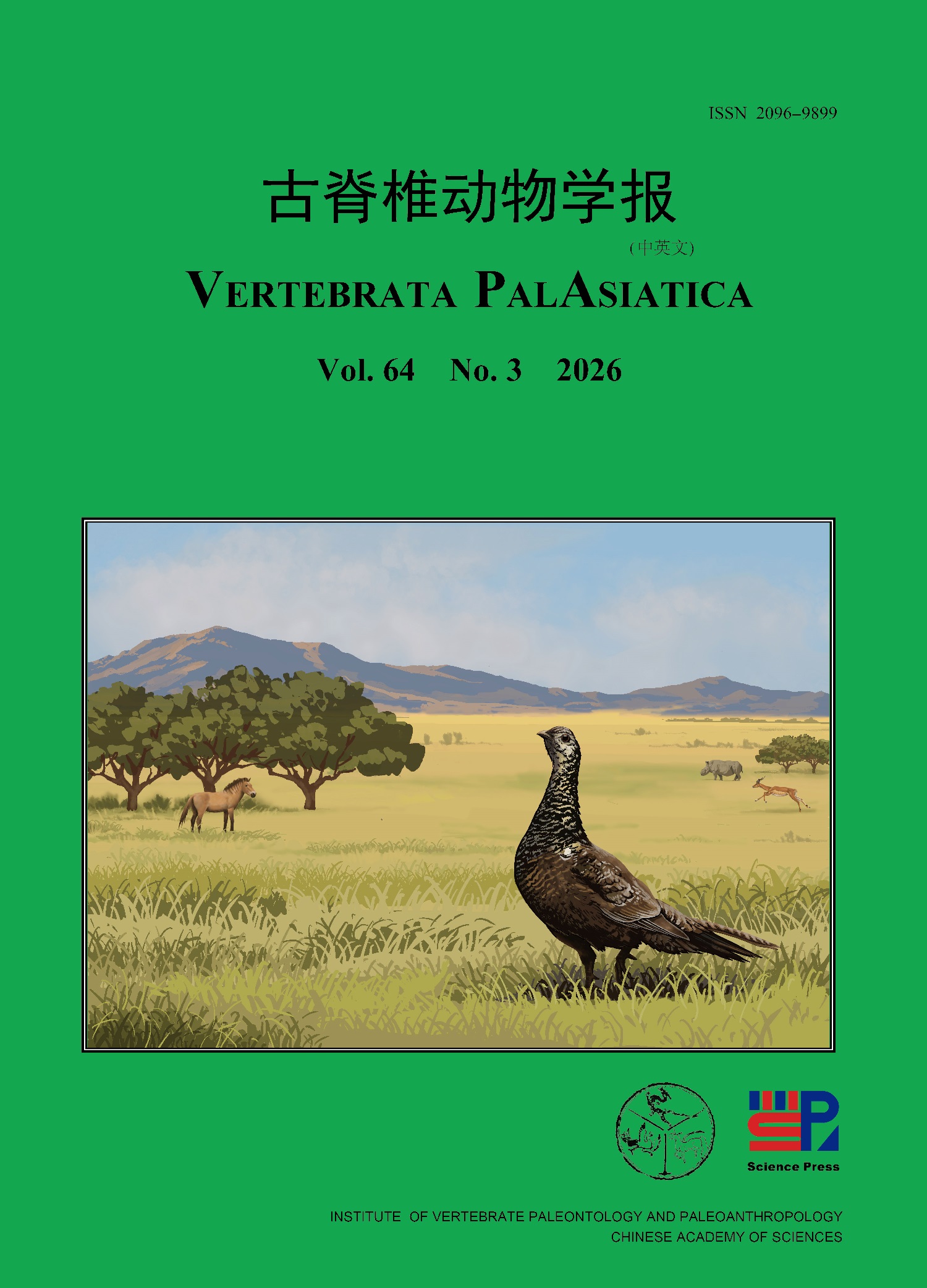
封面说明:临夏纤骨鸡及其生态复原图。临夏纤骨鸡(Gracilisgallus linxia gen. et sp. nov.)是一种小型雉科鸟类,因四肢骨骼纤细、跗跖骨上的距相对较长而得名。其化石产自甘肃临夏盆地十里墩村晚中新世最晚期至早上新世早期的地层,是中国首次发现的与现生松鸡和火鸡亲缘关系密切的鸡形目新物种。该发现为晚中新世至早上新世之交火鸡与松鸡等谱系在北美和东亚之间的分化提供了关键的内部分子钟校准点,同时揭示了该时期伴随气候急剧变化,此类群在欧亚大陆中纬度地区经历了复杂的扩散与分化过程。详见本期余婷钰等人文。(绘图:许勇)
Cover image: Gracilisgallus linxia gen. et sp. nov. and its paleoecological reconstruction. G. linxia is a small phasianid bird distinguished by its gracile limb bones and a relatively elongated spur on the tarsometatarsus. The holotype specimen was recovered from the latest Late Miocene to earliest Pliocene deposits at Shilidun Village in the Linxia Basin, Gansu Province, representing the first Chinese galliform species closely allied to extant grouse and turkeys. This discovery provides a crucial internal calibration point for molecular clock analyses of the divergence between the turkey and grouse lineages across North America and East Asia during the Late Miocene–earliest Pliocene transition, while revealing complex patterns of dispersal and diversification across mid-latitude Eurasia in response to rapid climatic shifts. See details in the paper by Yu et al. (Illustration by Xu Yong)